
How the US–Iran Conflict Is Already Affecting UK Energy Prices
By Switch365 - (2026-03-05)
Over the past week, we have had a lot of conversations with businesses asking the same question.
Will the conflict between the United States and Iran affect UK energy prices?
It is a fair question. The UK does not import energy directly from Iran, so on the surface, the two things may seem unrelated.
In reality, global energy markets are tightly connected. When something disrupts supply in one part of the world, the effects are often felt everywhere. What is happening in the Middle East right now is a good example of that.
Wholesale gas and oil markets have already moved sharply. The reasons behind that movement are worth understanding because they explain how the situation could affect energy contracts in the UK over the coming months.
The Strait of Hormuz and why it matters
One of the most important factors is the Strait of Hormuz.
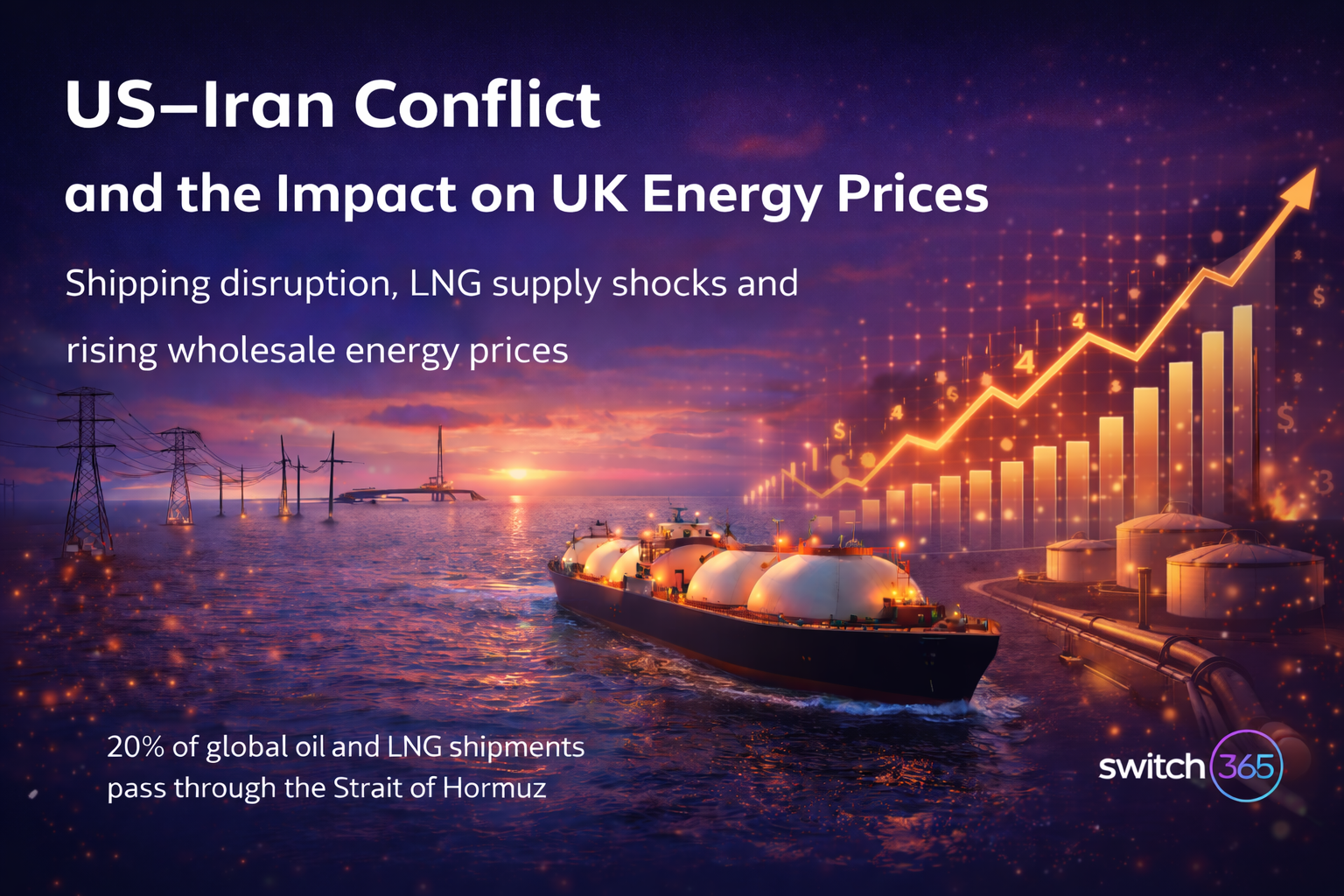
This narrow stretch of water between Iran and Oman is one of the most critical shipping routes in the global energy system. Around one-fifth of the world’s oil supply passes through it. A similar share of global LNG shipments travel through the same corridor.
If that route is disrupted, the consequences reach far beyond the region.
Following the escalation of the conflict, tanker traffic slowed sharply. Several shipping companies stopped sending vessels through the Strait while the situation was assessed. At the same time, insurers began withdrawing war risk cover for ships operating in the Gulf.
Insurance is essential for commercial shipping. Without it, many ships cannot legally sail. Even when cover is available, the cost has risen sharply as insurers price in the additional risk.
The result has been a significant slowdown in shipments leaving the Gulf and a rise in freight costs for vessels still willing to operate in the area.
This alone is enough to move energy markets because traders start to worry about the reliability of supply.
Qatar’s LNG production halt
The situation intensified further when Qatar halted LNG production at its Ras Laffan facilities following attacks in the region.
This is not a small disruption. Ras Laffan is the largest LNG export complex in the world, and Qatar is responsible for roughly 20% of global LNG supply.
Even if the halt is temporary, it forces markets to consider where replacement supply might come from.
Liquefied natural gas is traded globally. Cargoes can be redirected between continents depending on where prices are highest. If supply falls in one region, buyers in Europe and Asia compete for the remaining cargoes.
That competition pushes prices higher.
The reaction in wholesale markets
Gas markets reacted quickly once the scale of the disruption became clear.
European gas prices rose sharply within a few trading sessions. The increase was one of the largest short-term moves since the early stages of the energy crisis in 2022.
Oil markets also moved higher. Brent crude climbed as traders priced in the risk of supply disruption across the Gulf.
When both oil and gas prices rise together, the impact spreads through electricity markets, transport costs and industrial energy prices.
Europe’s reliance on global LNG
Another reason the market response has been so strong is Europe’s reliance on global LNG.
Before 2022, Europe relied heavily on pipeline gas from Russia. Since the invasion of Ukraine, that supply has largely been replaced by LNG imports.
This has improved energy security in some ways, but it also means Europe is more exposed to disruptions in the global LNG market.
When a major supplier like Qatar stops production, the effects are felt quickly across Europe because the region must compete with Asia and other buyers for available cargoes.
At the same time, European gas storage levels are lower than they were at this point last year. Storage currently sits 30% full. Countries will soon begin buying gas to refill those reserves ahead of next winter.
If LNG supply is tight during that period, prices can rise quickly.
Shipping disruption and supply chains
The conflict is also affecting global shipping more broadly.
Thousands of vessels are now either waiting to transit the Gulf or rerouting to avoid the region. This has pushed freight costs higher and added delays to global supply chains.
While this is not only about energy cargoes, it does increase transport costs across a wide range of goods. Higher freight costs eventually filter through to fuel prices, manufacturing costs and inflation.
What this means for UK businesses
For businesses in the UK, the immediate effect is likely to be seen in wholesale energy prices and supplier contract offers.
When wholesale markets move quickly, suppliers usually respond by adjusting their pricing. Quote validity periods often become shorter and contract prices can change more frequently.
This does not mean prices will continue rising. Energy markets can change direction quickly if tensions ease or supply routes reopen.
What it does mean is that periods of volatility make timing more important for businesses approaching contract renewal.
Companies that understand how the market is moving are better placed to make informed decisions about when to secure pricing.
Staying ahead of the market
Events like this are a reminder that energy markets are influenced by developments across the world.
A conflict thousands of miles away can quickly affect prices paid by businesses here in the UK.
For organisations with energy contracts renewing in the next twelve months, it is sensible to keep a close eye on market movements and supplier behaviour.
The goal is not to predict exactly what will happen next. It is to understand the market well enough to make decisions at the right time.
That is where good advice and clear market insight become valuable.
At Switch365, we work with businesses to track wholesale markets, understand supplier pricing trends and plan energy contracts with confidence.
If your energy contract is due to renew within the next year and you would like to understand how the current market conditions might affect your options, our team is always happy to help.
